AI Phone Receptionists: The Math of Missed Calls (and the Revenue You’re Missing)



What You’ll Learn
- The True Cost of Missed Calls: Why not answering the phone costs real bookings and why you must prioritize speed.
- Why Phone Leads are More Valuable: Did you know that calls convert 10 to 15 times better than web inquiries?
- How AI Phone Receptionists Fix the Problem: 24/7 answering, better lead qualification, and making sure calls reach the right person.
- What AI Phone Receptionists Offer: We’re going to compare several AI tools available in the current market.
- Real Numbers: We’ll give you an example of how missed calls impact revenue.
- Common Concerns About AI Phone Receptionists: Why do some teams worry about using AI? And do you know why they really shouldn’t do that?
Why This Matters
Nowadays, phone calls are rarely random. They have some of the highest-intent moments in your funnel, especially in weddings and events, where couples are dealing with multiple vendors, dates, and timelines. When someone actually picks up the phone to call, they’re no longer browsing. Instead, they’re actively gathering information to make that final decision.
- Research shows that reaching decision-makers directly has significantly higher success rates, with conversion rates as high as 86% compared to engaging lower-level contacts.
- Phone calls put you in front of the person who has the power to say yes.
In the wedding industry specifically, communication speed isn’t just “nice.” It’s a deciding factor:
- WeddingPro reports that 7 in 10 couples say vendor responsiveness is the most important factor when choosing a venue to book. Interestingly, 40% say they didn’t hear back within five days after submitting an inquiry.
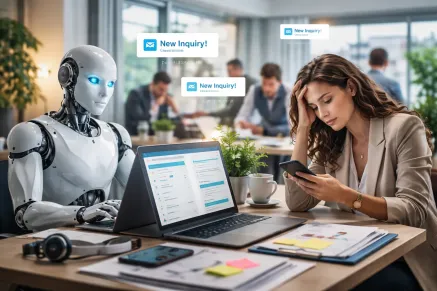
The same applies to phone calls. When calls go unanswered, interest disappears, competitors step in, and the opportunity quietly vanishes.
Missed calls aren’t a small operational issue. They’re a compounding revenue leak.
1 | Missed Calls Aren’t “Lost Messages.” They’re Lost Bookings.
A missed email can sit in an inbox for hours and a lot of times can still be recovered. A missed phone call rarely works that way.
When someone calls your venue or business, you know that someone is done scrolling and comparing and simply wants to know: “Are you available? What’s the pricing? Can we tour? Do you do Saturdays? Can you hold my date?”
When you don’t answer, three things happen at once:
- You lose the opportunity (and the emotional peak that drives bookings).
- You trigger comparison shopping (“Let’s call another venue”).
- You burn the marketing budget that you paid to make the phone ring in the first place.
Unanswered calls are a direct loss. There’s no follow-up message explaining that they booked elsewhere. They simply vanish from your pipeline.
Speed-to-Lead Is Not a Vibe. It’s Math.
Most teams underestimate how fast conversion odds fall when response is delayed:
- According to HubSpot, if you wait 30 minutes to call a lead back, your chances of reaching them drop significantly – up to 100 times lower compared to calling them within the first 5 minutes.
- Your chances of qualifying a lead drop 21 times if you wait 30 minutes instead of following up within 5 minutes.
This math is even more relevant when talking about phone calls. When callers don’t reach a human or at least get meaningful engagement, they don’t just sit and wait. They dial the next option.
It’s important to understand that speed decides who gets the tour, who gets the proposal, and who ultimately gets the booking.
2 | Phone Leads Are Worth More (So Missing Them Costs More)
Phone calls typically have higher intent, especially for high-consideration purchases. Research shows that phone calls convert to revenue 10–15x more than web leads.
When people call, they want clarity and certainty. Hence, phone calls are exceptionally valuable, and missed phone calls might turn out to be pretty expensive.
Why Do Humans Miss Calls (Even When They Care a Lot)?
No venue operator misses calls because they don’t want to book more events. They miss calls because event businesses are dynamic and demanding.
They may have missed a call because:
- They’re on-site.
- They’re on a tour.
- They’re handling a tasting.
- Their phone is across the room.
- It’s after hours (and they’re finally living their life).
Leads don’t care in this case. They just want answers, affirmation, and next steps.
3 | AI Phone Receptionists Fix the Problem (Without Adding Staff)
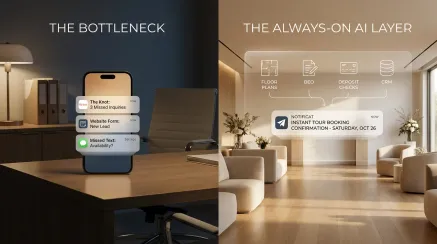
An AI phone receptionist changes the equation because it can do what human teams can’t:
1) Answer instantly 24/7
Forget about “we’ll call you back” and “leave a voicemail.” A real answer right away.
2) Qualify with consistency
A good AI phone receptionist can collect the exact details your sales team needs to transform a raw call into a potential client. Most AI tools won't have any issues gathering the following information:
- Date + flexibility
- Guest count
- Event type
- Budget range (or at least budget fit cues)
- Location needs
- Must-haves (ceremony on-site, late-night, BYOB, etc.)
- Timeline (“trying to book this week” vs. “researching for next year”)
3) Direct the calls to the right teams
AI handles urgency and can transfer the call to the right human who will then handle connection and closure.
4) Stop wasting your budget
If you pay for traffic, directories, ads, SEO, or referrals that drive calls, then every missed call is a paid lead you lost.
According to research conducted by McKinsey, AI-driven tools contribute to a 50% reduction in response time when it comes to handling sales calls.
4 | The New Front Line of Sales: AI Phone Receptionists
It’s also important to understand that not all AI solutions are built for the realities of venues and event professionals.
Some tools focus on post-inquiry follow-up, others prioritize sales calls for traditional sales teams. Very few are designed to handle high-intent event inquiries over the phone, where availability, pricing, policies, and emotional reassurance all matter at once.
Let’s take a look at how some AI tools compare.
Breezit AI
Breezit AI offers a purpose-built AI sales assistant designed specifically for venues and event professionals. The AI is trained on each business’s real data such as pricing, availability rules, policies, and FAQs. As a result, 99.5% of questions are answered accurately and naturally.
Inbound phone calls are answered instantly 24/7. Breezit AI can be configured to step in after a set number of rings, ensuring your team has the first chance to answer while no call ever goes unanswered. The AI qualifies callers in real time, collects event details, answers questions regarding pricing and availability, and directs calls to a human only when it’s strictly necessary. If a lead doesn’t reply on a different channel, the system can follow up with an outbound phone call.
Breezit works alongside email, portals, and texts. Yet, one of its core strengths is eliminating unanswered calls entirely.
RingCentral
RingCentral offers an AI receptionist as part of its broader cloud phone system. It’s designed primarily to answer inbound calls, direct callers to the right teams, and schedule appointments.
The AI can be customized with a business’s general knowledge, policies, and processes, and calls can be answered instantly 24/7 by directing callers to the appropriate department or voicemail.
The problem, though, is that RingCentral’s AI receptionist is not built specifically for venues or event professionals. It better suits industries like law or healthcare, where the primary goal is appointment scheduling and not complex sales conversations.
Frontdesk
Just like the aforementioned apps, Frontdesk offers an AI tool that can answer inbound calls instantly 24/7. Similarly to the others, it can also handle basic questions, schedule appointments, and direct sales inquiries to the right team.
Frontdesk can be customized using general business information, FAQs, policies, and pricing. It also supports SMS-based follow-ups, but it does not make outbound phone calls or operate across any other channels. As a result, Frontdesk works best when capturing calls and scheduling appointments.
5 | The Compounding Revenue Leak: A Simple Example
Let’s analyze this scenario:
Imagine a business that gets around 120 inbound calls a month. On average, about thirty percent of those calls aren’t answered, which means roughly 36 people never get through. From the calls that are answered, about fifteen percent turn into actual bookings, with an average booking worth $6,000.
If those 36 missed callers had been answered and converted at the same rate, that would mean around five or six additional bookings each month. If each booking is worth $6,000, those missed conversations add up to roughly $32,000 in lost revenue every single month.
That’s $384,000 a year!
Even if you cut that in half because not every caller is qualified, or your close rate is lower, you still have an annual leak. Don’t forget that that’s only counting the missed calls – not the answered calls where the caller is put on hold too long, gets a rushed response, or doesn’t get a follow-up.
This is why “we’re busy” is not a valid response!
6 | Common Concerns About AI Phone Receptionists (and Why They’re Fading)
Adopting AI to answer or make phone calls can be particularly risky in an events industry built on trust and personal connection. The most common concerns include:
- Accuracy: Many businesses worry an AI might quote incorrect pricing or availability. However, purpose-built systems can help you avoid that because they operate within strict guidelines and escalate issues to humans when unsure.
- Sounding robotic: There’s a fear that callers might feel like they’re talking to a machine. Yet again, modern voice systems can match a warm human tone.
- Losing the human touch: Some teams worry automation will replace real relationships. In reality, AI handles first response and qualification so humans can focus on high-value conversations like consultations and closing a deal – that’s where empathy and trust matter most.
- Loss of control: Teams may feel anxiety about what’s said on the company’s behalf. That’s not entirely true. Strong AI tools allow full control over messaging, escalation rules, and data sources.
So using AI isn’t the problem. The issue is continuing to miss calls. As expectations for instant response rise, not answering the phone is becoming a big threat to your bottom line.