Virtual Assistants vs AI Assistants: What Actually Converts More Bookings for Venues


What You’ll Learn
- The Reality of Human VAs: Why humans are exceptionally valuable but also highly limited when it comes to handling numerous inquiries.
- Popularity of AI Assistants: Why so many venues and event pros are turning to automation.
- Benefits of Combining Human Support and AI Assistance: Did you know that most companies report significant increases in bookings after enabling AI sales tools?
- What to Prepare for in the Future: Why human-only processes are becoming a thing of the past.
- A Way to Assess Your Current Process: What to do before you incorporate an AI assistant into your work processes.
Why Speed and Consistency Now Matter More Than Ever
Wedding couples don’t just compare venues, they compare response times.
When someone reaches out, they expect immediate clarity on availability, pricing, and next steps. If that clarity doesn’t come quickly, they move on.
Today, inquiries often arrive outside business hours, during weekends, or while teams are already busy with events. In that environment, the venues that respond first and follow up consistently are the ones that win the booking.
This is why the debate between virtual assistants and AI assistants isn’t theoretical anymore. It’s directly tied to conversion.
1 | The Reality of Human-Driven Workflows
No one will argue that in-house teams are the backbone of many venue and event operations. They bring judgment, adaptability, and a personal touch. Yet, if workflows depend entirely on people, the following issues arise:
- Response gaps outside working hours
- Inability to handle unpredictable inquiry surges fast
- Inconsistent response speed, especially under pressure
- Disruption caused by turnover and retraining
And the biggest problem is that these issues typically surface unexpectedly and when potential clients are most ready to book.
2 | Why Automation Is Being Added at the Front Line
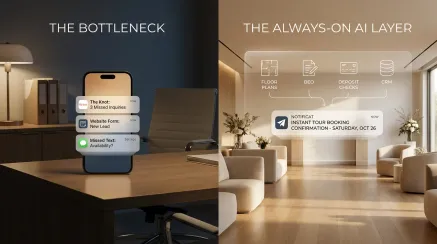
When venues and event pros face the previously mentioned issues, it’d be simply illogical just to ask humans to move faster – humans need rest, they don’t work 24/7. Instead of pushing humans to the very edge of their capabilities, many teams are redesigning the system.
As a result, around 50% of venues and event pros are using various AI tools in their operations. AI Sales Assistants are designed to acknowledge inquiries right away, answer common questions, check dates and availability. Most of them can also book tours and send follow-ups automatically.
This ensures that no inquiry waits or is forgotten altogether, no matter how long it is and what time it was sent. Humans remain essential; they aren’t replaced. However, their effort is more needed later in the process, especially when carrying out negotiations and finalizing a deal.
3 | What Changes with a Blended Setup
Considering everything that was said above, why not combine human support and AI assistance into one? When AI and human support operate together, inquiry handling becomes far more efficient.
AI copes with the pressure of speed and volume. Humans step in when conversations become nuanced or strategic. As a result, response time stabilizes, the number of missed inquiries drops, and teams regain control even during the busiest periods.
Multiple studies confirm that after venues and vendor pros enabled an AI sales assistant, they saw up to 50% more bookings. So if you’re making $100,000 in revenue, this could mean a sweet extra $50,000 in your bank account!
4 | What Forward-Looking Teams Are Preparing For
Let’s get one thing straight: as inquiry volume continues to grow, systems built entirely around manual responses will struggle to keep up.
Many venues and event pros are training their teams to learn to use AI. And they’re doing so not to replace humans in the future; they’re doing that to remove bottlenecks that keep the business slow.
Used thoughtfully, AI assistants create a foundation that supports growth and lets staff work with less stress. For venues and event professionals, this shift is becoming less about innovation and more about resilience.
5 | A Simple Way to Assess Your Current Process
Before you incorporate an AI assistant into your work processes, answer the following questions:
- How long does it take for your team to respond to new inquiries?
- When do most inquiries arrive?
- Where is human time spent today?
- How many leads go quiet or are missed?
When you know the answers to those questions, start testing the right AI assistant that will handle the lead response and take over some other basic tasks from your workload. Keep it going for a few weeks. Then, compare the results (such as conversion rates and workload shifts) before and after the experiment. We’re sure the improvement will speak for itself.